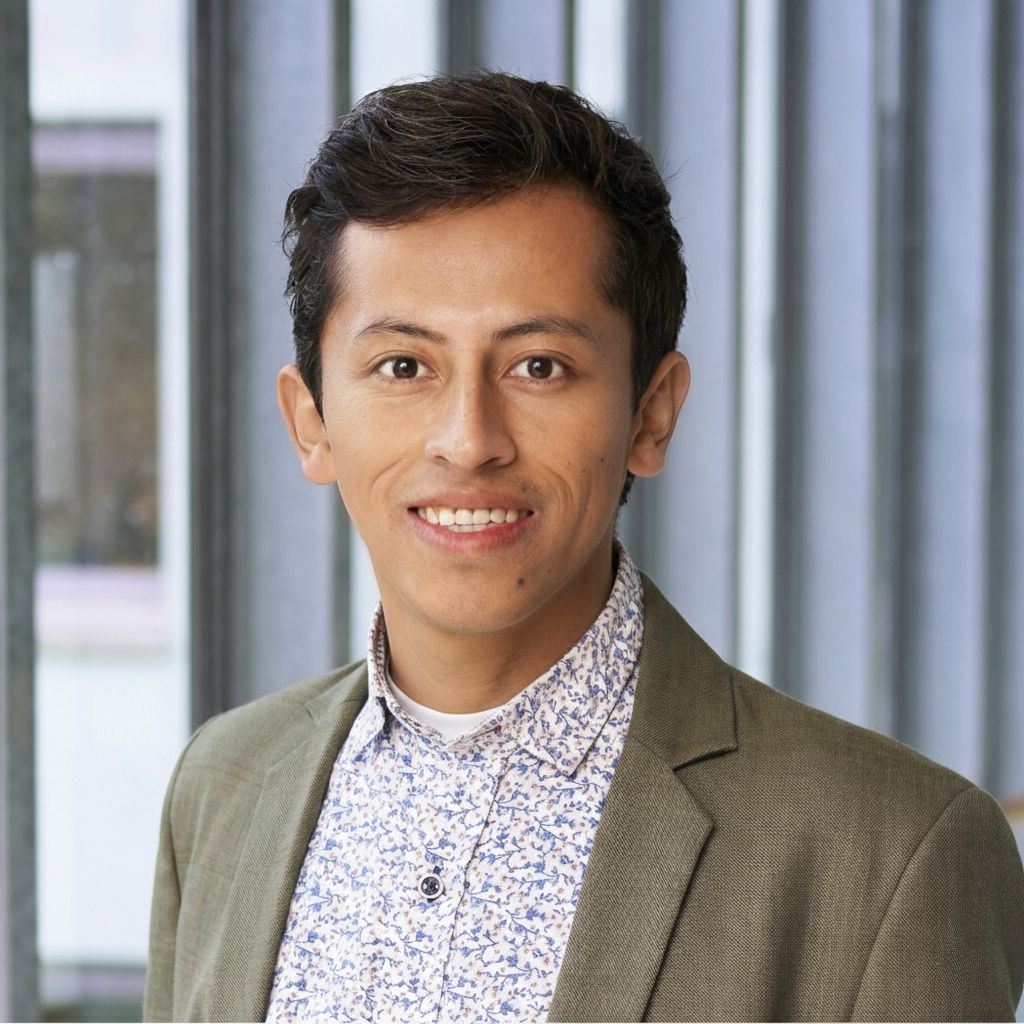
Ricardo Vargas Carpintero
Ricardo Vargas Carpintero
Research Associate - Department of Biobased Resources in the Bioeconomy, University of Hohenheim
From Forest to Bioeconomy: Integrated Innovations for Non-Wood Forest Products

September 17, 2026 - 12:00 PM
Forests provide far more than timber and carbon storage. Non-wood forest products (NWFPs)—including foods, medicines, oils, resins, and other natural products derived from plant and fungal biodiversity—support livelihoods, cultural practices, and major industries worldwide. Unlocking the potential of NWFPs within forest-based bioeconomies can bring multiple benefits by strengthening rural livelihoods, reducing deforestation pressures, incentivizing biodiversity conservation, and diversifying the renewable resource base of the bioeconomy. Achieving this potential requires innovations across NWFP value chains, from primary production to high-added value products. In this talk, participants will explore how innovation drives the development of NWFP value chains through cases such as the Acrocomia palm, a multifunctional forest resource from the tropical savannah woodlands of Latin America, illustrating the application of bioeconomy principles and highlighting the need for integrated approaches to enable sustainable scaling of NWFP value chains.
Speaker Biography
Ricardo Vargas Carpintero – Research Associate, Department of Biobased Resources in the Bioeconomy, University of Hohenheim
Ricardo Vargas Carpintero (Dr. sc. agr.) is a Research Associate in the Department of Biobased Resources in the Bioeconomy at the University of Hohenheim and deputy coordinator of the IUFRO Task Force 50, Building an Integrated Vision of the Forest-Based Sector within a Bioeconomy. He holds a bachelor’s degree in Industrial Engineering from the Universidad Distrital Francisco José de Caldas (Bogotá, Colombia), a master's degree in Bioeconomy and a doctorate in Agricultural Sciences from the University of Hohenheim (Stuttgart, Germany). His research focuses on the design and development of biobased value chains and webs and the innovation systems to support them, with an emphasis on non-timber forest products and novel crops such as the Acrocomia palm within forest-based bioeconomy systems in Latin America. He has also contributed extensively to bioeconomy education and capacity building as co-editor of the first and second editions of the book Bioeconomy, Advancing the Transition to a Sustainable, Biobased Economy.
Recommended Reading
IUFRO. (2026). Advancing sustainable forest-based bioeconomy approaches: An expanded policy brief.