
By: Mia Ambroiggio ‘26 MEM
The 32nd annual conference of the Yale Chapter of the International Society of Tropical Foresters (ISTF) welcomed more than 1,400 registrants — both virtual and in person — during the first week of February to explore the future of governance in tropical forest communities.
ISTF is a long-standing tradition at the Yale School of the Environment, entirely organized and executed by students. This year’s conference team was led by three co-chairs, Dylan Rose ’26 MEM, Federico Perez ’27 MEM/MPP, and Matt Rutkowski ’26 MEM, and supported by 19 graduate and doctoral student volunteers. Established in 1989, this annual convening continues to serve as a forum for students, scholars, practitioners, and community members to discuss the interconnected socio-ecological issues shaping tropical forests.
The conference featured a blend of keynotes, panels, and interactive sessions, all centered around guiding questions: What safeguards are needed to ensure carbon and biodiversity markets deliver real impact and social justice? How can we foster new models of co-governance that elevate local and Indigenous leadership? What tools, networks, and mindsets must be cultivated among next-generation forest leaders?
This year’s focus on leadership shaped conversations about the future of tropical forests. The program was organized around three pillars: ecology and conservation science; innovative finance for forests; and policy, governance, and leadership. Across these themes, speakers represented diverse tropical forest communities and perspectives. Mark Plotkin ’81 MFS, ethnobotanist and president of the Amazon Conservation Team (ACT), delivered the opening keynote, sharing insights from his decades of learning from Indigenous shamans about traditional plant knowledge.
Following Plotkin’s keynote, participants engaged in a panel on innovative finance for forests and a series of interactive sessions, ranging from a forest policy debrief to guided tours of relevant collections at the Peabody Museum. Clare Scheib-Feeley ‘26 MEM reflects on co-facilitating an interactive session on community-centered landscape restoration, saying “participants’ faces lit up during our teamwork-based simulation … It was great to create a playful atmosphere for discussing the challenges of tropical forest landscape conservation, bringing warmth and collaboration amid an otherwise frigid weekend.” Carlos Correa, former Minister of Environment and Sustainable Development of Colombia, delivered the second keynote, sharing insights from his work advancing landmark climate and biodiversity policies and launching major restoration initiatives, before the evening reception concluded the day.

Panelists pose for a photo after concluding a discussion on innovative forest finance. Photo: Rahul Shah
On Saturday morning, Carlos Nobre, senior researcher at the Institute for Advanced Studies at the University of São Paulo, delivered the final keynote address, drawing from his research on Amazon deforestation and advocacy for a science-based, standing-forest bioeconomy. The conference concluded with additional panels, interactive sessions, and a closing plenary on integrated leadership for tropical forests.
Beyond the importance of the conference itself — and the collaborative space it creates to advance tropical forest solutions — the experience offers Yale School of the Environment students invaluable opportunities to develop skills in organizing, communication, and leadership.
“This year, as students, we intentionally shaped ISTF around the theme of leadership, and it truly became a space where leadership felt tangible. I had the privilege of working with close friends to organize a panel where we invited international local community leaders to define what success looks like for them in conservation and sustainable practices,” says Maria Blanco ’26 MEM.
The work began long before the conference itself. Conference co-chairs reflect on the significance of seeing months of planning come together. “It was really lovely to see all of the hard work of our different teams come together to produce a very successful conference with many moving parts,” says Dylan Rose ’26 MEM. “Everyone worked really hard and invested so much time and energy into pulling together the conference. It really took a lot of hands.”
Students involved in ISTF leave the school with experience they will carry throughout their careers. Federico Perez ’27 MEM/MPP calls being part of the ISTF team a highlight of his Yale experience: “It’s a hands-on community that brings together people who care deeply about tropical forests and are serious about impact. Every event leaves you with new insights, new collaborators, and more hope.”
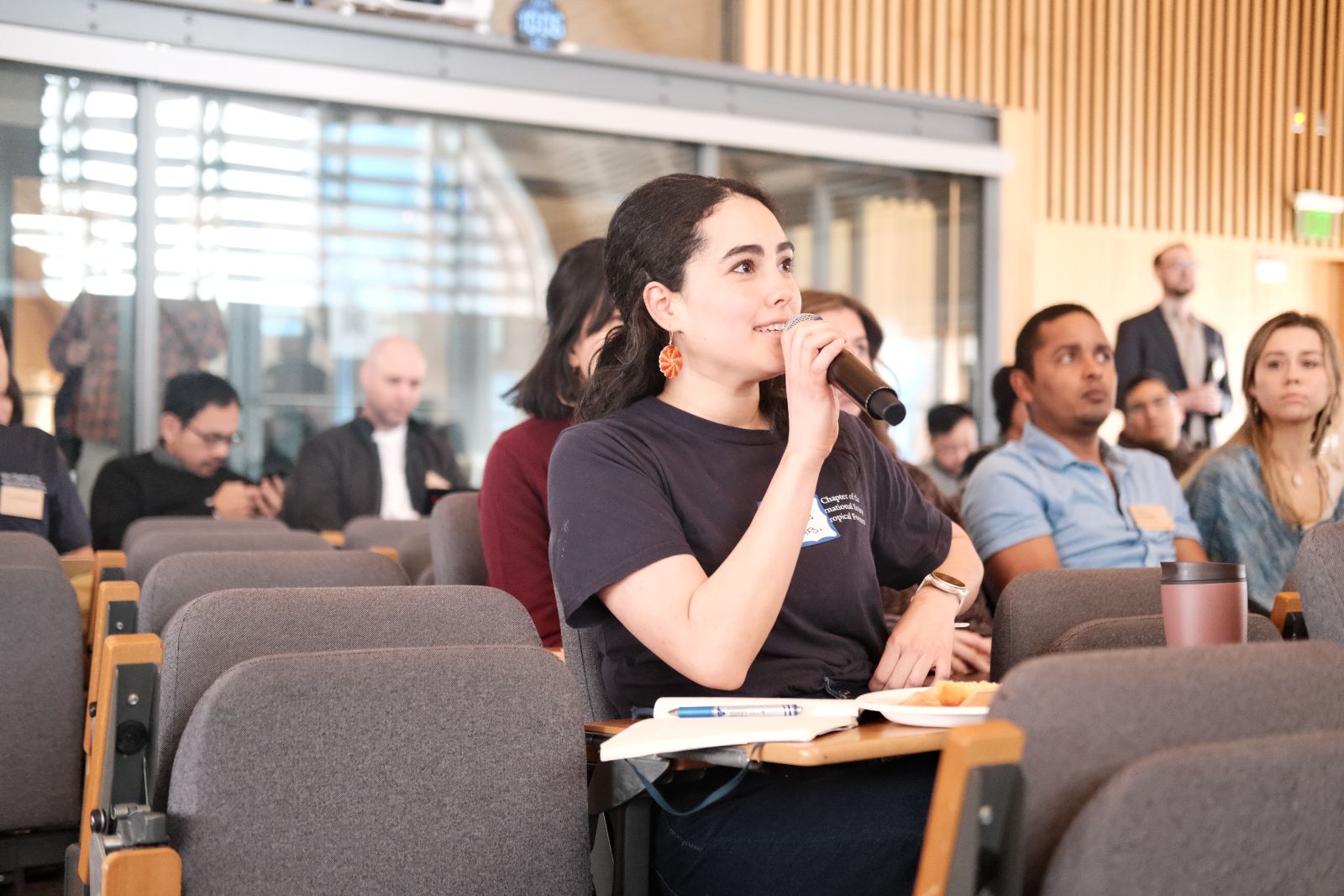
María Alejandra Gallegos Koyner ‘26 MFS, a volunteer on the panels team, asks a question during a conference session. Photo: Rahul Shah


