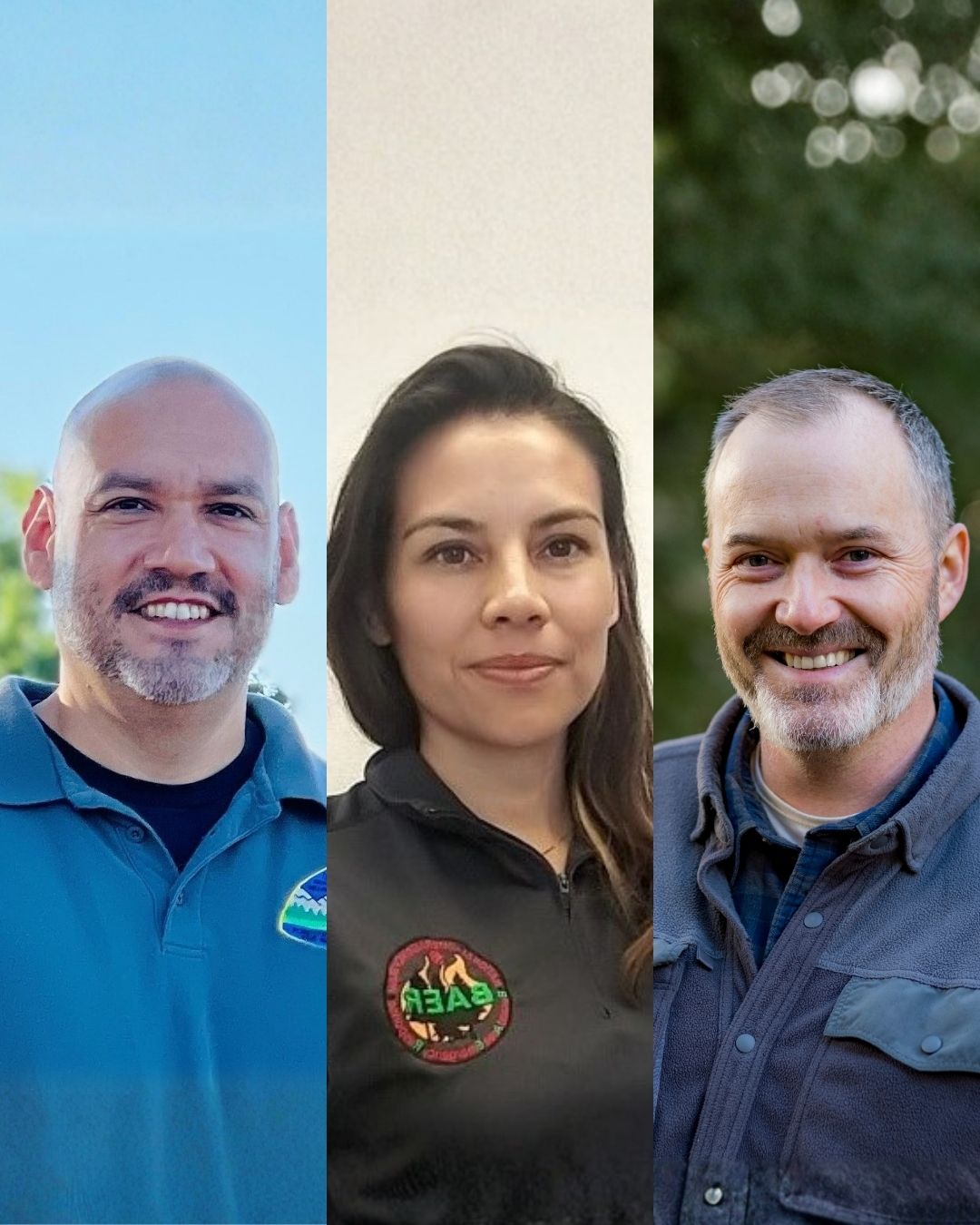
Aaron Baldwin, Juliette Jeanne, and Brian Kittler
Aaron Baldwin, Juliette Jeanne, and Brian Kittler
- United States Wildland Fire Service and American Forests
Panel Discussion: Wildfire Management Over Suppression

April 07, 2026 - 12:00 PM
Wildfires are becoming more extreme, with longer fire seasons that demand faster initial response, year-round readiness, and stronger interagency coordination. Tribes face disproportionate risks during these conditions, as their homelands are inseparable from culture, identity, and sovereignty. By incorporating emerging technologies, a more risk-informed response model can improve suppression effectiveness while prioritizing firefighter safety. This panel will examine the unique considerations for Tribal incorporation in the newly established US Wildland Fire Service and the integration of emerging science.
Speaker Biographies
Aaron Baldwin – Director, Office of Tribal Trust, United States Wildland Fire Service
Aaron Baldwin is the Director of the Office of Tribal Trust for the U.S. Wildland Fire Service. He began his career in wildland fire in 1996 as an Administratively Determined (AD) on-call firefighter. During those early years, he split his time between running crews and engines, along with a short stint in the coordination system. Baldwin later served as the Fire Management Officer for the National Park Service at Lake Mead for five years. In 2012, he moved to Washington, D.C., where he spent three years as the Bureau of Indian Affairs Associate Director of Fire Policy and Resource Protection. Over the course of his career, Baldwin has also served as the BIA Fire Director and the Bureau of Land Management Division Chief of Fire Operations. Most recently, in 2021 he returned to serve again as the BIA fire director.
In the years ahead, he is excited to work alongside the leadership of the U.S. Wildland Fire Service to strengthen engagement with tribes in wildland fire management. He also looks forward to continuing to build understanding across the service about the importance of tribal partnerships and the opportunities to work together.
Juliette Jeanne – Deputy Director of Tribal Engagement, Office of Tribal Trust, United States Wildland Fire Service
Juliette Jeanne is the Deputy Director of the Office of Tribal Trust for the U.S. Wildland Fire Service (USWFS), where she supports national efforts to strengthen Tribal engagement and advance trust responsibilities in wildland fire management. Prior to the Department of the Interior's unification of its wildland fire programs, she served as the Branch Chief for Administration and Support with the Bureau of Indian Affairs (BIA), bringing extensive experience in tribal natural resource management, interagency coordination, and post‑wildfire recovery. A member of the Hopi Tribe and a graduate of Stanford University with B.S. and M.S. degrees in Earth Systems, she has supported Tribal and federal partners through roles spanning environmental protection, emergency stabilization, and national Burned Area Emergency Response (BAER) operations. Jeanne has held key leadership and technical positions across the BIA, including service as Deputy Director for the Post‑Wildfire Recovery Program, where she contributed to national policy evaluation, program monitoring, and field support for post‑fire recovery efforts. Her career reflects a long‑standing commitment to advancing Tribal sovereignty, strengthening collaborative federal‑Tribal relationships, and improving mission delivery across natural resource and wildland fire programs.
Brian Kittler – Chief Program Officer, Resilient Forests, American Forests
Brian Kittler leads American Forests’ Resilient Forests program, which develops and implements policies and practices for reforestation and forest climate solutions. He previously worked with the Pinchot Institute for Conservation, Sustainable Northwest and the National Fish and Wildlife Foundation, advancing forest conservation, watershed restoration and policy innovation. Kittler has served on the federal Wildland Fire Mitigation and Management Commission and in advisory roles on forest and climate issues. His work focuses on the intersection of science, policy and land management to support resilient landscapes and communities. He holds degrees from Colby College and Johns Hopkins University in policy and science.