
By: Hassan Alzain ’26 MEM
Two Series, One Urgent Conversation
In fall 2025, the Yale Forest Forum convened two complementary series that examined how forests have been understood, managed, and valued over time. One series looked backward, tracing the history of scientific forestry from early-modern Europe to ecosystem management in the United States. The other looked forward, interrogating the science and integrity of forest carbon crediting as a modern climate tool. Together, they offered a rare opportunity to explore how past ideas about forests continue to shape present decisions, and why those decisions matter now more than ever.
Delivered through weekly public webinars and paired with Yale seminars and faculty-guided publications, the two series demonstrated that YFF is a space where history, science, and practice meet. Rather than treating forestry as a settled discipline, both series invited participants to question how knowledge is produced, whose expertise counts, and how forests are governed in an era of ecological uncertainty.
A History of Scientific Forestry: From Extraction to Ecosystem Management
The fall 2025 series “A History of Scientific Forestry: From Extraction to Ecosystem Management” traced how forestry emerged as a scientific and professional practice. Speakers illustrated how scientific forestry developed in response to fears of scarcity, state interests, and industrial demand. Early forest laws and centralized management systems reframed forests as measurable resources to be regulated for economic and political stability.
As forestry ideas spread across Europe, South Asia, and North America, they were shaped by colonial expansion, technological change, and institutional growth. Expert speakers examined how forestry education, professional organizations, and government agencies formalized scientific authority while reshaping forest landscapes. These systems emphasized efficiency, sustained yield, and control, often at the expense of ecological complexity and social equity.
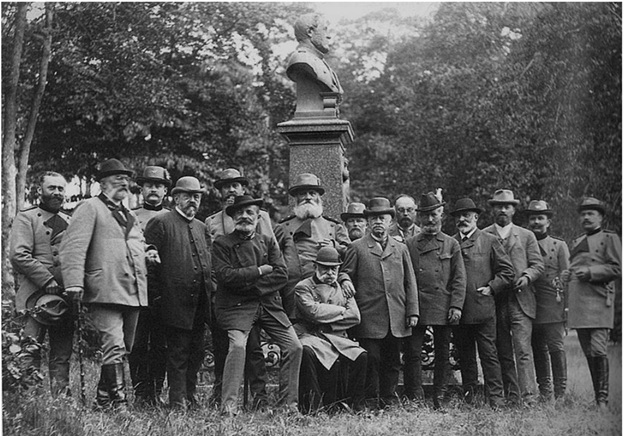
Delegates gather at Eberswalde in 1892 to establish the International Union of Forest Research Organizations, institutionalizing international collaboration in forest science. Image courtesy of Wikimedia Commons.
Recovering Overlooked Knowledge and Voices
As the series progressed, speakers foregrounded perspectives long marginalized in forest history. Indigenous scholars and practitioners described how scientific forestry frequently conflicted with place-based stewardship on Tribal lands, while also highlighting contemporary efforts toward co-stewardship and cultural burning. Other presentations recovered the critical roles women played as educators, advocates, scientists, and field workers, shaping public understanding of forests well beyond formal forestry institutions.
These sessions emphasized that forestry has always been shaped by many forms of knowledge, even when professional systems failed to recognize them. By situating scientific forestry within broader social and cultural contexts, the series challenged the idea that forest management can ever be purely technical.
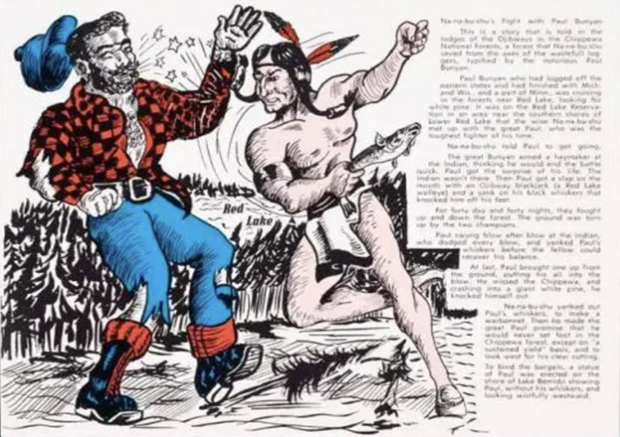
Indigenous narratives have been used to reclaim land in the Northwoods. Image courtesy of the Minnesota Historical Society.
Frontiers in Forest Carbon Crediting
Running alongside the historical series, “Frontiers in Forest Carbon Crediting” examined how forests are positioned today as tools for climate mitigation. Through diverse sessions, the series explored how forest carbon markets developed, where their scientific and methodological weaknesses lie, and which innovations may improve their integrity. Speakers examined issues such as baseline setting, additionality, leakage, permanence, and monitoring, showing that carbon accounting systems are shaped as much by policy and negotiation as by science.
Discussions in the series expanded from project-scale accounting to jurisdictional approaches, climate risk, and emerging tools such as dynamic baselines, remote sensing, and digital measurement systems. Speakers pushed beyond carbon alone, introducing albedo and other biophysical feedbacks that complicate simple climate claims. The series illustrated that forest carbon crediting is an evolving field still grappling with uncertainty and risk.
Why These Conversations Matter Now
The two series revealed a shared lesson: forests have always been managed through the ideas, values, and tools of the time. Historical forestry shows how well-intentioned systems produced unintended ecological outcomes, while modern carbon markets reveal how contemporary climate solutions carry their own assumptions and limitations. Understanding both trajectories is essential as forests face intensifying pressures from climate change, disturbance, and competing social demands.
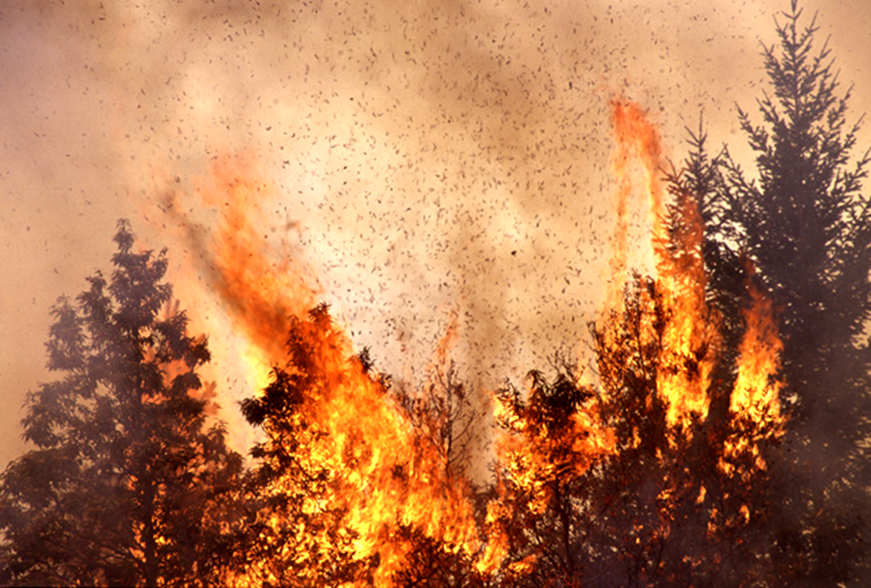
Crown fire in a conifer forest illustrates the risk of high intensity wildfires in dense, fire suppressed stands. Image courtesy of the U.S. Forest Service.
By convening these two series in parallel, YFF created space for reflection across time scales, from centuries of forest management history to the frontiers of climate accounting. Collectively, they underscored that learning how we came to manage forests is inseparable from deciding how we should care for them in the future.


